There’s a point where good skincare, facials, and lighter treatments can only take your skin so far. Maybe the acne is long gone, but the scars are still there. Fine lines have become more noticeable. Years of Arizona sun are beginning to show. Or your skin simply doesn’t have the smoothness and clarity it once …

There’s a point where good skincare, facials, and lighter treatments can only take your skin so far.
Maybe the acne is long gone, but the scars are still there. Fine lines have become more noticeable. Years of Arizona sun are beginning to show. Or your skin simply doesn’t have the smoothness and clarity it once did.
That’s where fractional CO2 laser treatment can be a very different kind of treatment.
CO2 resurfacing isn’t simply designed to give your skin a temporary glow. It creates controlled areas of resurfacing that trigger the skin’s natural healing response and collagen remodeling. Depending on the treatment settings, it can address everything from mild texture and early signs of aging to deeper wrinkles and acne scars.
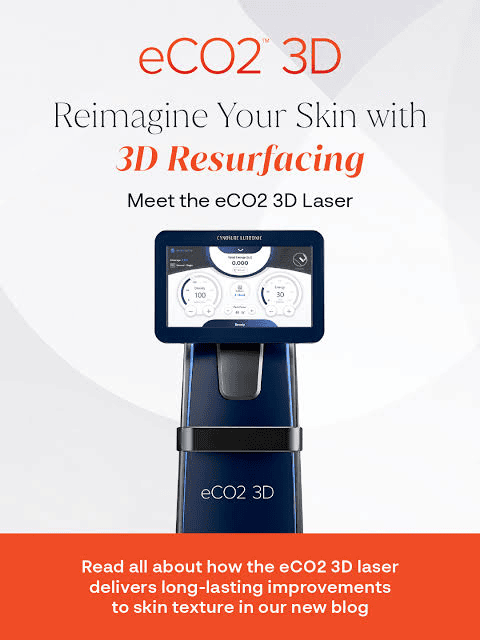
At Reid MD Aesthetics in Ahwatukee, we use the Cynosure Lutronic eCO2 3D platform, which gives our physicians the ability to customize the depth and intensity of treatment based on your skin, concerns, goals, and tolerance for downtime.
Ready to find out if fractional CO2 laser treatment is right for your skin? Schedule a consultation with Reid MD Aesthetics.
What Is Fractional CO2 Laser Treatment?
Fractional CO2 laser treatment is a skin resurfacing procedure that creates microscopic treatment columns in the skin while leaving surrounding tissue intact to support healing. It can improve wrinkles, acne scars, enlarged pores, uneven texture, sun damage, and certain types of pigmentation. Treatment intensity and downtime can be customized based on the amount of correction desired.
That last point matters.
CO2 resurfacing isn’t one standardized treatment where everyone receives the same intensity. A patient wanting subtle skin renewal with less downtime needs a very different treatment plan than someone trying to improve deeper acne scars or established wrinkles.
What Does Fractional CO2 Laser Resurfacing Actually Do?
A fractional CO2 laser delivers focused columns of laser energy into targeted areas of the skin.
The word fractional is important. Instead of treating every millimeter of skin uniformly, the laser treats a fraction of the skin at a time. The surrounding untreated tissue helps support the healing process.
The treatment has two major goals:
- Resurface visible skin damage by removing microscopic columns of damaged tissue.
- Stimulate collagen remodeling as the skin repairs itself.
Think of it as controlled renovation rather than simply polishing the surface.
This is also what separates deeper CO2 resurfacing from gentler treatments designed primarily for brightness or superficial pigmentation. When appropriately selected and performed, CO2 can address more established changes in the skin.
What Does CO2 Laser Resurfacing Treat?
One reason CO2 laser skin resurfacing in Phoenix is so frequently researched is its versatility. It can address several concerns at once rather than focusing on a single issue.
Common concerns include:
- Acne scars
- Fine lines and wrinkles
- Rough or uneven texture
- Enlarged pores
- Sun-damaged skin
- Certain pigmented lesions and discoloration
- Surgical and traumatic scars
- Age-related skin changes
- Overall skin resurfacing and rejuvenation
However, being able to treat something doesn’t automatically mean CO2 is the best treatment for every person with that concern.
The type of scar, pigmentation, skin type, medical history, current medications, sun exposure, and amount of downtime you can realistically manage all matter.
That’s why we prefer to start with the problem you’re trying to solve, not the machine you think you need.
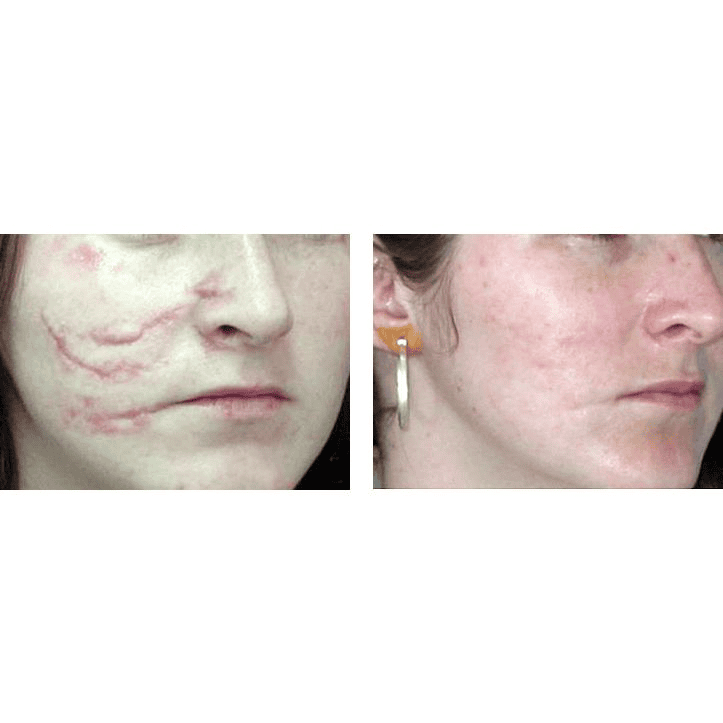
CO2 Laser for Acne Scars
Acne can disappear years before the evidence it left behind does.
For patients with atrophic acne scars, meaning scars that create depressions or unevenness in the skin, fractional CO2 resurfacing can be particularly useful because it addresses both surface irregularity and deeper collagen remodeling.
The goal isn’t to erase every scar. That’s rarely a realistic promise.
Instead, treatment may help:
- Soften the appearance of depressed acne scars
- Smooth uneven texture
- Make transitions between scarred and surrounding skin less noticeable
- Stimulate new collagen
- Improve overall skin quality
Are all acne scars treated the same way?
No, and this is where a good consultation matters.
Rolling scars, boxcar scars, and deep ice-pick scars behave differently. Some patients may benefit from CO2 resurfacing alone, while others need a combination approach.
If you’ve been told you need “a laser for acne scars,” that’s only the beginning of the conversation. The better question is what type of scars do you have, and what will actually improve them?
CO2 Laser for Deep Wrinkles and Fine Lines
There’s a difference between temporarily making a wrinkle less noticeable and remodeling the skin where that wrinkle has developed.
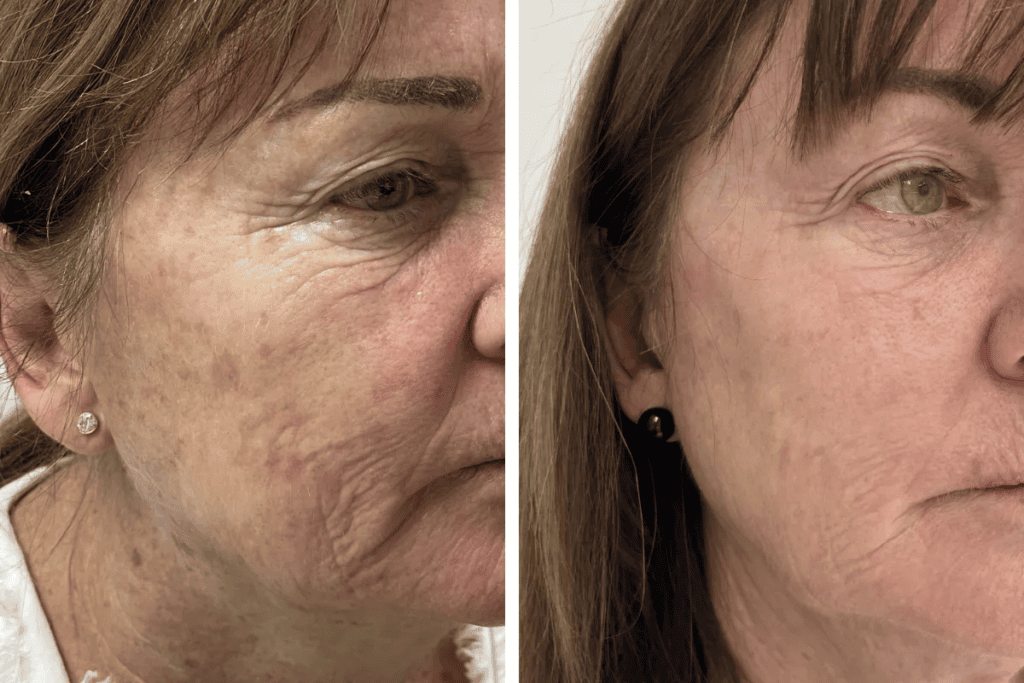
Fractional CO2 resurfacing can be particularly valuable for etched-in lines and areas of photodamaged skin because treatment can reach deeper than many lighter resurfacing procedures.
Patients commonly seek treatment for:
- Fine lines around the eyes
- Lines around the mouth
- Crepey-looking texture
- Deeper facial wrinkles
- General age-related texture changes
Results aren’t instant. Your skin needs time to heal and remodel collagen.
That gradual process is part of the appeal. The goal is healthier, smoother-looking skin, not a face that suddenly looks unfamiliar.
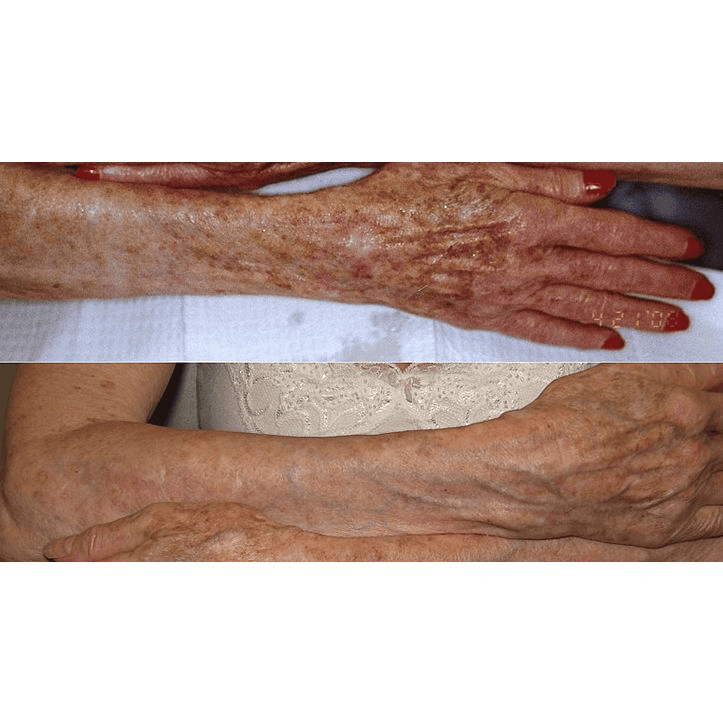
Can CO2 Laser Help With Sun Damage and Pigmentation?
It can help improve certain forms of sun-related pigmentation and photodamage.
And here in Phoenix, that’s a particularly relevant conversation.
Years of strong Arizona sun exposure can contribute to uneven pigmentation, roughness, fine lines, and other visible signs of photodamage. CO2 resurfacing can address multiple components of that damage in a single treatment plan.
But pigmentation is not one condition.
A brown spot caused by cumulative sun exposure isn’t necessarily treated the same way as melasma or post-inflammatory hyperpigmentation. Some pigment conditions require a more cautious approach because aggressive treatment can potentially worsen discoloration.
This is one reason we don’t recommend choosing a laser based solely on a before-and-after photo you saw online.
Does CO2 Laser Improve Texture and Enlarged Pores?
Yes. Texture is one of the areas where resurfacing can make a noticeable difference.
Fractional CO2 treatment can help improve the appearance of:
- Rough skin
- Uneven texture
- Enlarged-looking pores
- Fine surface lines
- Mild scarring
- Overall skin quality
Patients sometimes describe the concern simply as, “My skin doesn’t look smooth anymore.”
That’s a perfectly valid reason to come in. You don’t need to know the medical terminology or which laser setting you need. That’s our job.
Can CO2 Laser Treat Surgical or Traumatic Scars?
Fractional CO2 technology may also be used to improve certain surgical and traumatic scars.
The goal is usually to make a scar less noticeable, not to promise that it will disappear completely.
Scar treatment is highly individual. Age of the scar, depth, thickness, color, location, skin type, and how your body heals can all influence the treatment plan and expected improvement.
A scar should be evaluated before determining whether laser resurfacing is appropriate.
Not All CO2 Laser Treatments Are Equally Aggressive
This may be the most important thing to understand about modern CO2 resurfacing.
People often hear “CO2 laser” and picture one very aggressive procedure followed by a long, uncomfortable recovery.
That isn’t the whole story.
With the eCO2 3D system at Reid MD Aesthetics, treatment can be customized across different depths and intensities. Its interchangeable microbeam tips and adjustable treatment parameters allow us to tailor resurfacing to what we’re actually trying to accomplish.
In practical terms:
Lighter resurfacing:
Refresh texture, fine lines and overall skin quality with less recovery.
Moderate resurfacing:
Address more visible texture, wrinkles, sun damage and scarring.
Deeper resurfacing:
Target more established wrinkles, acne scars and significant textural concerns, with correspondingly greater downtime.
More aggressive isn’t automatically better.
The best treatment is the least aggressive approach capable of realistically addressing your goals.
Precision Peel vs. Deeper eCO2 3D Resurfacing
At Reid MD Aesthetics, one of the advantages of eCO2 3D is the ability to offer very different levels of resurfacing.
Precision Peel: Refresh With Less Downtime
Our Precision Peel is designed for patients who want skin renewal without committing to deeper CO2 resurfacing.
It may be appropriate when your priorities include:
- Fine lines
- Enlarged-looking pores
- Mild texture irregularities
- Early sun damage
- Dullness
- Collagen stimulation
- Overall skin refreshment
It’s a good example of why saying “I had CO2” doesn’t tell the whole story. Treatment depth makes a major difference.
Deeper eCO2 3D Resurfacing: More Correction, More Recovery
When concerns are more established, deeper fractional CO2 resurfacing may be recommended.
This is where we may target:
- Deeper wrinkles
- More significant acne scarring
- Pronounced texture irregularities
- More extensive photodamage
- Certain scars
- More advanced skin aging
The tradeoff is straightforward: greater correction generally requires greater recovery.
For the right patient, that tradeoff can be well worth it.
How Much Downtime Does CO2 Laser Resurfacing Have?
There isn’t one honest answer to “How long is CO2 laser downtime?” because treatment intensity varies considerably.
A useful way to think about recovery is:
| Treatment Level | Typical Goal | Relative Downtime |
| Light / Precision Peel | Glow, pores, fine texture, early aging | Minimal to mild |
| Moderate resurfacing | Wrinkles, texture, sun damage, scarring | Several days or more |
| Deeper resurfacing | Deeper wrinkles, acne scars, significant skin renewal | More substantial recovery |
Your physician should discuss the expected recovery for your exact treatment settings before treatment.
What does CO2 laser recovery look like?
Depending on intensity, you may experience:
- Redness
- Swelling
- Warmth or sensitivity
- Dryness
- Peeling or flaking
- Temporary changes in skin color
- A period when you’ll want to keep your social calendar light
With deeper resurfacing, your skin will need more time and more deliberate post-treatment care.
This isn’t the treatment to squeeze in two days before family photos because someone online said they “barely had downtime.”
Plan around the treatment you’re actually receiving.
What Does eCO2 3D’s Controlled Chaos Technology Do?
The name sounds dramatic, but the idea behind Controlled Chaos Technology is fairly simple.
Instead of placing each microbeam sequentially next to the last, eCO2 3D randomizes their placement across the treatment area. This helps limit concentrated thermal buildup while delivering energy consistently.
For patients, the technology is designed to support a more controlled treatment experience while still allowing meaningful resurfacing.
It’s a good example of a technical feature that only matters because of what it allows us to do: customize treatment while carefully managing energy delivery to the skin.
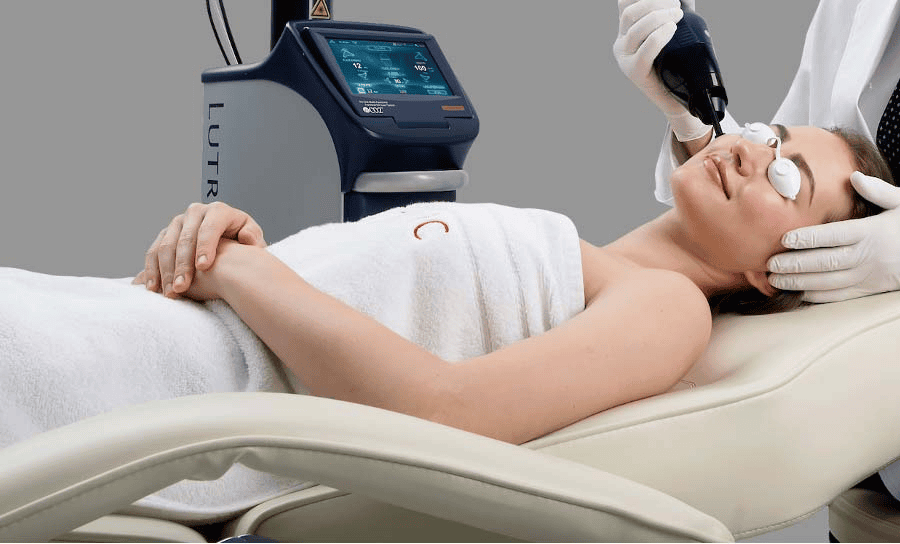
What Should I Expect Before, During, and After CO2 Laser Treatment?
Before treatment
Your consultation is arguably as important as the laser session itself.
We’ll evaluate your skin, discuss what bothers you, review relevant medical history and determine whether CO2 resurfacing makes sense for your goals.
At Reid MD Aesthetics, we can also use Aura Reality 3D skin imaging when appropriate to get a more detailed look at the skin and establish a baseline.
You’ll receive specific pre-treatment instructions based on your treatment plan.
During treatment
The experience varies depending on the depth and area being treated.
Comfort measures are typically used, and treatment parameters are selected specifically for your skin and desired outcome.
After treatment
Post-treatment care matters.
Freshly resurfaced skin needs to be protected while it heals. You’ll receive instructions for cleansing, hydration, skincare, sun avoidance, and when to resume your normal products.
Phoenix patients should take the sun part seriously. Our climate makes diligent sun protection especially important after resurfacing.
When Will I See Results From CO2 Laser Resurfacing?
CO2 results develop in stages.
After the initial healing period, many patients begin noticing improvements in smoothness, tone, and overall skin quality. Collagen remodeling continues beyond the visible surface recovery, so improvement can continue over the following weeks and months.
This is one reason we encourage patients not to judge their final result too early.
Healing is an event. Collagen remodeling is a process.
How Many Fractional CO2 Laser Treatments Do I Need?
It depends on the concern and the intensity of treatment.
A more aggressive resurfacing treatment may accomplish a significant amount in a single session. Lighter treatments may be performed as part of a series when gradual improvement with less downtime is preferred.
Factors that influence the number of treatments include:
- Acne scar severity
- Wrinkle depth
- Degree of sun damage
- Treatment intensity
- Skin type
- Age and collagen response
- Desired outcome
- Amount of downtime you’re comfortable with
There’s no benefit to selling someone three sessions if one appropriately selected treatment can achieve the desired result. The opposite is also true. A treatment shouldn’t be pushed too aggressively simply because someone wants everything fixed in one visit.
CO2 Laser vs. LaseMD Ultra: What’s the Difference?
This is a common source of confusion because both can be described as “laser resurfacing.”
The easiest distinction is refresh versus deeper renewal.
LaseMD Ultra is a gentler, non-ablative thulium laser often chosen for pigmentation, brightness, tone, texture, and skin revitalization with less downtime.
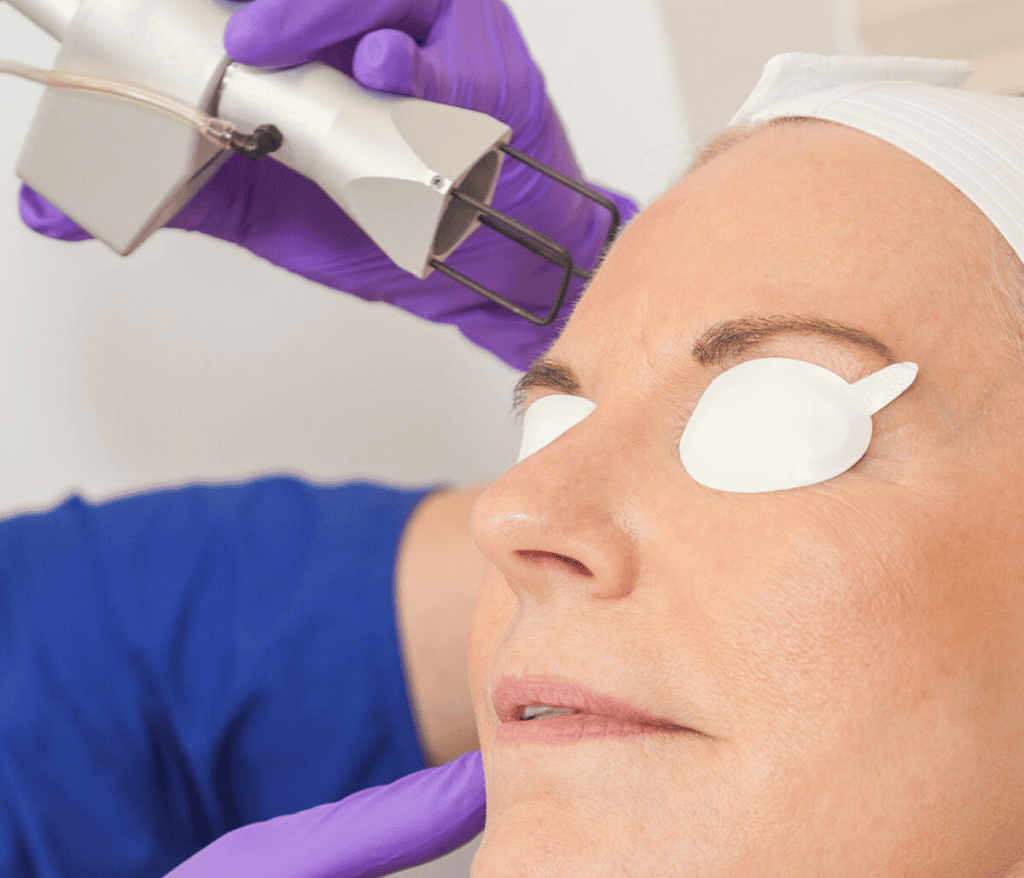
eCO2 3D is an ablative fractional CO2 platform capable of more significant resurfacing for concerns such as deeper wrinkles, acne scars, pronounced texture and more established photodamage.
Neither is universally “better.”
If pigmentation and dullness are your primary concerns and downtime matters, Ultra may make more sense. If deeper scars and wrinkles are driving the conversation, eCO2 may be the better tool.
Sometimes the answer isn’t choosing one forever. Different treatments can play different roles in a long-term skin plan.
What About CO2 Laser vs. XERF Skin Tightening?
They solve different problems.
eCO2 3D focuses primarily on resurfacing and skin renewal. XERF focuses on deeper tissue heating for skin tightening and collagen remodeling without ablating the surface.
Here’s an easy way to think about it:
- Loose or lax skin: Think XERF
- Wrinkles, scars and rough texture: Think eCO2
- Both laxity and significant surface aging: A combination approach may be worth discussing
Reid MD Aesthetics also offers X•RENEW, our signature treatment approach combining XERF with eCO2 3D for patients who want to address deeper firmness and visible surface aging as part of a more comprehensive plan.
Who Is a Good Candidate for Fractional CO2 Laser Treatment?
A good candidate may be someone bothered by visible skin damage or textural changes who understands that meaningful resurfacing requires real healing time.
CO2 may be worth discussing if you’re concerned about:
- Acne scars
- Deeper wrinkles
- Fine lines
- Rough texture
- Enlarged-looking pores
- Certain scars
- Sun-related skin damage
- More established signs of aging
Good candidates also need realistic expectations and the ability to follow post-treatment instructions carefully.
Who Shouldn’t Have CO2 Laser Resurfacing?
CO2 isn’t appropriate for everyone, and some patients require additional precautions or an alternative treatment.
Factors that may affect candidacy include:
- Active skin infections or open lesions
- Certain medical conditions that affect healing
- A history of abnormal scarring
- Certain medications
- Pregnancy
- Recent significant sun exposure or tanning
- Inability to avoid sun during recovery
- Skin types or pigmentation concerns that carry an increased risk of post-inflammatory pigment changes
This isn’t an exhaustive screening list.
Your medical history, medications, skin type, history of cold sores, previous procedures, and tendency toward pigmentation changes should all be discussed with your provider.
What Are the Risks of CO2 Laser Resurfacing?
CO2 resurfacing is a medical procedure, and being transparent about risk is part of good aesthetic care.
Potential complications can include prolonged redness, swelling, infection, acne-like eruptions, cold sore reactivation, temporary or persistent pigment changes, delayed healing and scarring.
The risk profile can vary with treatment depth, skin type, medical history, aftercare and sun exposure.
This is another reason provider selection matters. The goal isn’t simply finding someone who owns a powerful laser. It’s finding someone who understands when to use it, how aggressively to use it, and when not to use it at all.
How Much Does CO2 Laser Resurfacing Cost in Phoenix?
The cost of CO2 laser skin resurfacing in Phoenix varies because “CO2 treatment” can describe dramatically different procedures.
Pricing may depend on:
- Size of the treatment area
- Face versus face and neck
- Depth and intensity
- Type of concern being treated
- Number of treatments recommended
- Whether treatments are combined
Rather than choosing based on the lowest advertised CO2 price, find out what treatment is actually included.
A light resurfacing session and an intensive full-face CO2 treatment aren’t equivalent simply because both use a CO2 laser.
Phoenix Sun Exposure Changes the Conversation
Living in Phoenix doesn’t mean you can’t have laser resurfacing. It does mean sun management deserves more attention.
Freshly treated skin is especially vulnerable, and our abundant year-round sunshine makes accidental UV exposure easy.
If you’re planning fractional CO2 treatment:
- Be diligent about broad-spectrum sunscreen
- Follow your physician’s sun-avoidance instructions
- Wear a hat when appropriate
- Don’t intentionally tan before or after treatment
- Tell your provider about recent significant sun exposure
- Plan outdoor activities around your recovery
Sometimes the best treatment date isn’t the soonest available appointment. It’s the date that allows you to heal properly.
How Do I Know Which CO2 Treatment Depth Is Right for Me?
You shouldn’t have to figure that out yourself.
Start with three questions:
- What bothers me most about my skin?
- How much improvement am I hoping to achieve?
- How much downtime am I realistically willing to accept?
Those answers are much more useful than walking into a consultation asking for a specific laser setting.
Someone preparing for an event and wanting fresher-looking skin may be better suited to Precision Peel. Someone who’s spent years frustrated by acne scars may accept significantly more recovery for greater correction.
Same technology. Completely different goals.
Not sure whether you need a Precision Peel, moderate resurfacing, or deeper eCO2 3D treatment? Schedule a consultation to discuss your skin concerns, goals, and ideal downtime.
Frequently Asked Questions About CO2 Laser Resurfacing
Is fractional CO2 laser painful?
Comfort varies with treatment depth and individual sensitivity. Comfort measures are typically used, and a deeper resurfacing treatment will naturally feel different from a lighter Precision Peel. Your provider should explain what to expect before treatment.
How long does it take to heal after CO2 laser treatment?
Recovery depends heavily on treatment intensity. A lighter treatment may involve relatively little downtime, while deeper resurfacing requires a more significant healing period. Ask about the expected recovery for your specific settings rather than relying on a generic CO2 timeline.
Can CO2 laser remove acne scars completely?
No responsible provider should promise complete scar removal. Fractional CO2 can improve the appearance and texture of many acne scars, but the amount of improvement varies by scar type, severity, skin characteristics and treatment plan.
Does CO2 laser tighten skin?
Collagen remodeling after fractional CO2 resurfacing may contribute to improvements in overall skin quality, but CO2 resurfacing and dedicated skin-tightening treatments aren’t interchangeable. For laxity, Reid MD Aesthetics may recommend XERF or a combined approach depending on your goals.
Is CO2 laser good for melasma?
Melasma requires careful evaluation. Heat, inflammation, hormones and sun exposure can all influence the condition, and aggressive resurfacing isn’t automatically the right choice. Patients with melasma should have their pigmentation evaluated before choosing a laser treatment.
Can I have CO2 laser treatment on my neck?
Certain areas beyond the face may be treated in appropriately selected patients, but treatment parameters and healing considerations differ by area. Face and neck treatment should be planned individually rather than assuming identical settings are appropriate everywhere.
What’s the best time of year for CO2 laser resurfacing in Phoenix?
Many patients find periods with less intense outdoor activity easier for recovery because strict sun protection is important. However, treatment timing depends more on your lifestyle and ability to avoid significant UV exposure than the calendar alone.
Is one CO2 laser treatment enough?
Sometimes. Deeper resurfacing may produce meaningful improvement from a single session, while other concerns benefit from multiple treatments or a combination approach. Your treatment plan should be based on your skin and desired level of correction.
Choosing the Right Laser Starts With Your Skin, Not the Device
It’s easy to get lost comparing laser names, wavelengths, depths, tips, and settings.
Most patients don’t actually wake up wanting a fractional CO2 laser.
They want the acne scars to stop catching the light. They want the lines around their mouth softened. They want smoother skin. They want to look refreshed without looking like someone else.
That’s where the conversation should start.
At Reid MD Aesthetics in Ahwatukee, Phoenix, our physicians evaluate what you’re seeing, what you’d like to change, and how much recovery you’re comfortable with before recommending treatment. With eCO2 3D, we can personalize resurfacing from a lighter Precision Peel to more intensive fractional CO2 treatment rather than forcing every patient into the same protocol.
If you’re considering fractional CO2 laser treatment in Phoenix, schedule a consultation with Reid MD Aesthetics to find out whether eCO2 3D, Precision Peel, or another treatment approach makes the most sense for your skin.