XERF vs. CO2 Laser vs. Microneedling If your goal is simply to look fresher, smoother, or a little more like yourself again, choosing a treatment can get confusing fast. You start researching non surgical skin tightening and suddenly you're reading about radiofrequency, fractional CO2 lasers, collagen remodeling, microchannels, resurfacing, treatment depths and a dozen other …
XERF vs. CO2 Laser vs. Microneedling
If your goal is simply to look fresher, smoother, or a little more like yourself again, choosing a treatment can get confusing fast.
You start researching non surgical skin tightening and suddenly you’re reading about radiofrequency, fractional CO2 lasers, collagen remodeling, microchannels, resurfacing, treatment depths and a dozen other terms that don’t necessarily tell you what you really want to know:
Which treatment is actually best for my skin?
At Reid MD Aesthetics in Phoenix, we think that’s the more useful question. XERF, eCO2 3D and microneedling can all play a role in skin rejuvenation, but they aren’t interchangeable. One may be better for laxity and early jowling, another for deeper wrinkles or acne scars, and another for gradual improvement in texture and fine lines.
Understanding those differences can save you from choosing a treatment simply because it’s popular.
XERF vs. CO2 Laser vs. Microneedling: The Short Answer
XERF is primarily a noninvasive skin-tightening treatment that uses radiofrequency energy to heat deeper tissue and support collagen remodeling. Fractional CO2 laser treatment resurfaces damaged skin and is better suited to concerns such as deeper wrinkles, scars and significant texture. Microneedling in Phoenix creates controlled micro-injuries that encourage gradual skin renewal and can improve wrinkles and acne scars.
Here’s an even simpler way to think about it:
XERF = tighten
eCO2 3D = resurface
Microneedling = remodel
Of course, real skin isn’t quite that simple. Many people have more than one concern, which is why the best treatment plan sometimes uses more than one approach.
What Does Each Treatment Actually Do?
Let’s leave the technical jargon aside for a minute and talk about what these treatments mean when you look in the mirror.
XERF: Tighten and Firm Without Downtime
If the issue bothering you is that your skin doesn’t feel as firm as it used to, XERF may be the most logical place to start.
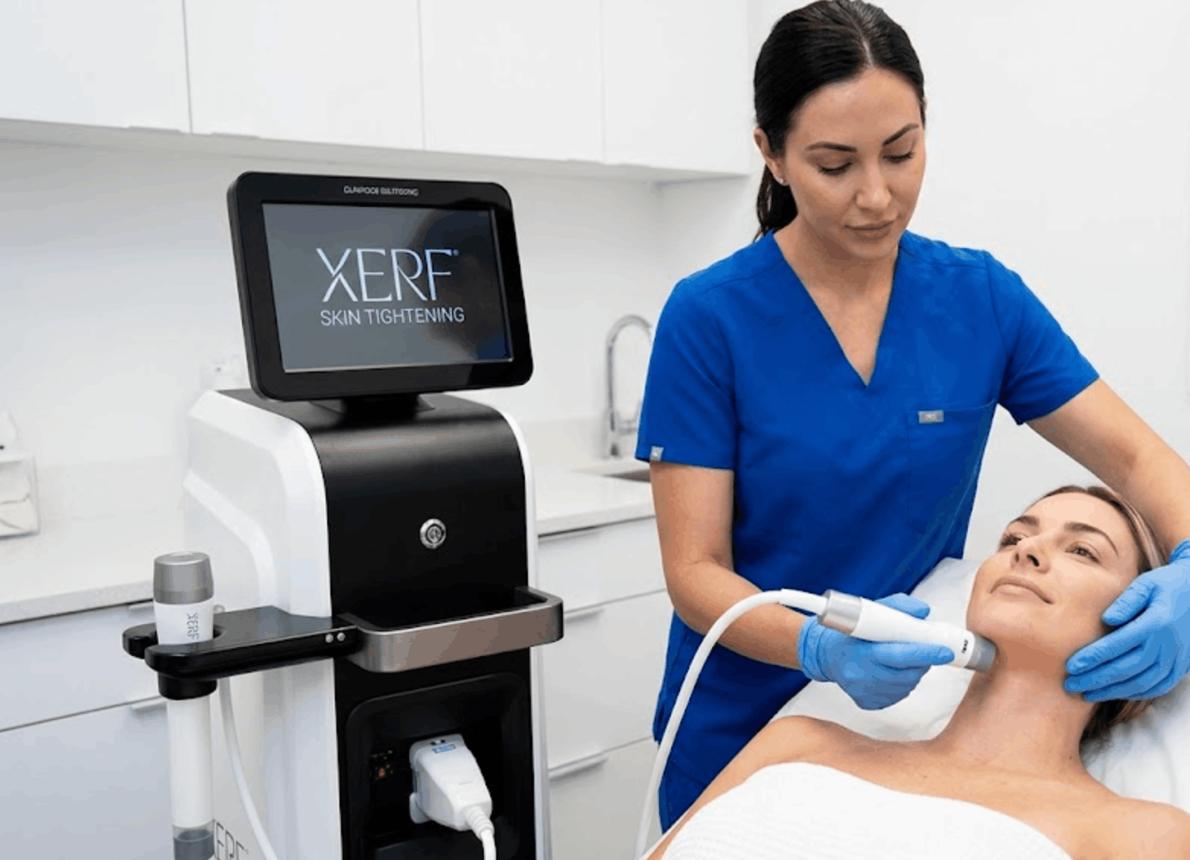
XERF uses multifrequency monopolar radiofrequency energy to deliver controlled heat at different tissue depths. The goal is to create a tightening effect while supporting collagen remodeling beneath the surface. Unlike treatments that intentionally resurface or puncture the skin, XERF requires no needles, numbing or downtime.
For patients researching XERF skin tightening in Phoenix, the appeal is fairly straightforward. You can address laxity without surgery and without planning your week around recovery.
XERF may be especially useful for concerns such as:
- Mild to moderate skin laxity
- Early jowling or a less-defined jawline
- Loose or aging skin along the lower face
- Neck laxity
- Overall loss of firmness
- Patients who want collagen-focused rejuvenation without downtime
This isn’t a treatment designed to peel away sun damage or aggressively resurface an acne scar. Its strength is deeper structural tightening.
eCO2 3D: Resurface More Significant Skin Damage
Sometimes tightening isn’t the main problem.
You may look in the mirror and see etched-in lines, acne scars, rough texture or years of accumulated sun damage. In that case, improving the surface and structure of the skin becomes more important.
That’s where a fractional CO2 laser treatment such as eCO2 3D enters the conversation.
Fractional CO2 technology creates microscopic zones of controlled ablation in the skin, leaving surrounding tissue available to support healing. Cynosure’s eCO2 3D platform can be customized by depth, density and treatment goal, from gentler resurfacing to more intensive correction. Its FDA-cleared indications include resurfacing and treatment of concerns including wrinkles, fine lines and textural irregularities.
Think of it this way: XERF works largely beneath the surface to tighten. eCO2 intentionally resurfaces the skin to renew it.
That makes eCO2 3D particularly compelling for:
- Deeper wrinkles and fine lines
- Acne scars
- Rough or uneven texture
- Pigmented lesions and visible sun damage
- More advanced signs of skin aging
- Patients seeking more substantial resurfacing
The tradeoff is recovery. More aggressive resurfacing generally asks more of your skin, and your calendar, than a no-downtime treatment.
Microneedling: Encourage Gradual Skin Remodeling
Microneedling sits somewhere else on the spectrum.
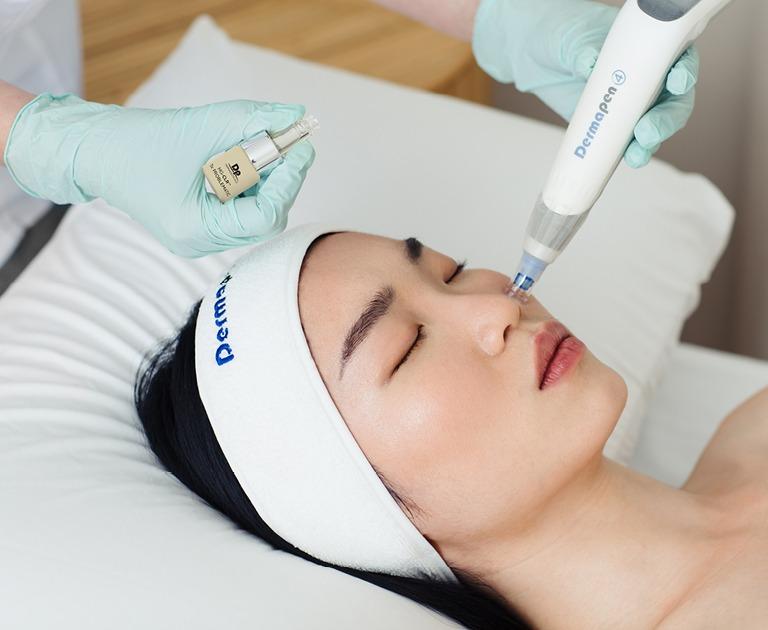
A medical microneedling device uses very small needles to create controlled microchannels in the skin. Rather than removing the skin’s surface like an ablative CO2 treatment, the process creates controlled injury that initiates a healing response.
FDA-authorized microneedling devices have indications that include improving the appearance of facial acne scars and facial wrinkles in adults 22 and older. (U.S. Food and Drug Administration)
For the right patient, microneedling can be a good option for:
- Fine lines
- Acne scars
- Uneven texture
- Gradual skin rejuvenation
- Patients who don’t need aggressive resurfacing
It’s also important to distinguish traditional microneedling from RF microneedling. They’re not the same treatment. RF microneedling combines needles with radiofrequency energy and has its own benefit and risk profile. The FDA issued a safety communication in 2025 after reports of serious complications associated with certain uses of RF microneedling, making provider selection and appropriate treatment parameters especially important.
Tightening vs. Resurfacing vs. Collagen Remodeling
This distinction is probably more helpful than memorizing the technology behind each device.
Imagine an older leather handbag.
If the leather has become loose and lost some of its structure, polishing the surface doesn’t solve the underlying problem. That’s closer to the problem XERF is designed to address.
If the surface itself is weathered, scratched and uneven, resurfacing becomes more important. That’s closer to what we’re trying to accomplish with eCO2 3D.
Microneedling takes a third approach, creating controlled micro-injuries to encourage the skin’s natural remodeling process.
Human skin is obviously far more complex than leather, but the analogy gets at an important point: the treatment should match the problem.
XERF vs. CO2 Laser vs. Microneedling Comparison
| XERF | eCO2 3D | Microneedling | |
| Think of it as | Tighten + firm | Resurface + renew | Remodel + refine |
| Technology | Multifrequency monopolar RF | Fractional CO2 laser | Controlled microneedles |
| Best suited for | Laxity, firmness, early jowling | Wrinkles, scars, texture, significant damage | Fine lines, acne scars, texture |
| Removes skin surface? | No | Fractionally, yes | No |
| Needles? | No | No | Yes |
| Collagen remodeling | Yes | Yes | Yes |
| Downtime | None expected | Varies by treatment intensity | Usually some short-term redness and sensitivity |
| Treatment intensity | Noninvasive | Highly customizable, including deeper resurfacing | Minimally invasive |
| Best fit when… | “My skin is getting loose.” | “My skin looks damaged or scarred.” | “I want gradual improvement in texture.” |
There isn’t a universal winner. The better treatment is the one that addresses what’s actually causing the concern you see.
What’s the Best Treatment for Loose or Sagging Skin?
If skin laxity is your primary concern, we’d generally look more closely at XERF.
XERF’s multifrequency RF system can deliver energy to shallow, middle and deeper tissue levels. Cynosure describes the treatment as providing visible tightening while collagen continues to remodel over time. It doesn’t require needles, numbing or post-treatment downtime. Schedule now.
This distinction matters.
Someone might come in asking about microneedling because they’ve heard it “builds collagen.” But after talking with them, we may find that what actually bothers them is a softening jawline and laxity around the lower face.
In that situation, the goal isn’t simply more collagen. It’s better support and tightening.
That’s why consultation matters more than arriving with a device already picked out.
What’s Best for Wrinkles and Skin Texture?
This depends on how significant the concern is.
For relatively mild textural changes or facial wrinkles, microneedling may provide the level of remodeling you’re looking for.
For deeper wrinkles, pronounced texture or more substantial photodamage, fractional CO2 resurfacing can provide a more intensive approach. The eCO2 3D system is particularly interesting because its interchangeable microbeam tips and adjustable treatment modes allow treatment depth and density to be customized rather than treating every patient at one fixed intensity.
And if wrinkles are accompanied by laxity?
That’s where combining treatment strategies becomes worth discussing.
What About Acne Scars?
Acne scars are a perfect example of why treatment selection shouldn’t happen from a checklist.
Not all acne scars are the same. Their depth, shape, age and surrounding skin all matter.
Medical microneedling has FDA-authorized applications for improving the appearance of facial acne scars. Fractional CO2 resurfacing can offer a more aggressive approach to textural irregularities and scarring when appropriate.
Someone with relatively mild textural scarring may need a very different plan than someone with deeper, established scars.
The right question isn’t, “Is CO2 better than microneedling?”
It’s “Which treatment makes sense for my type and severity of scarring?”
How Much Downtime Should You Expect?
This is one of the biggest practical differences among the three treatments.
XERF
There is no expected downtime, according to the manufacturer. No needles or numbing are required, which makes XERF particularly appealing to people who don’t want their treatment visible on Monday morning.
Microneedling
Temporary redness, tightness, dryness, peeling, discomfort and other short-term reactions can occur after medical microneedling. The FDA notes that most side effects occur shortly after treatment and resolve, although risks vary and complications are possible.
eCO2 3D
Expect more recovery from an ablative fractional CO2 treatment, especially when treating more aggressively.
But “CO2 laser” no longer necessarily describes one fixed level of treatment. eCO2 3D can be adjusted from lower-downtime Precision Peel treatments to more intensive resurfacing. Your recovery therefore depends heavily on the treatment selected for your skin and goals.
A useful rule of thumb: greater correction often comes with a greater willingness to accept recovery.
That doesn’t mean more aggressive is automatically better. Sometimes the smartest treatment is the least aggressive option capable of producing the improvement you want.
Can XERF and Skin Resurfacing Be Combined?
Yes, for appropriate patients, a treatment plan may address different layers and concerns rather than expecting one device to do everything.
This is where aesthetics becomes much more interesting than simply choosing between machines.
For example, a patient might have:
- Laxity along the jawline
- Fine lines around the face
- Uneven texture
- Acne scarring or sun damage
XERF may be considered for the tightening component, while resurfacing or microneedling may address concerns closer to the skin’s surface.
That doesn’t mean everyone should stack treatments. Timing, skin condition, treatment intensity, medical history and recovery all need to be considered. Combination treatment should be planned by a qualified provider rather than treated like a DIY menu.
What If I Want Results but Can’t Take a Week Off?
Tell us that.
It sounds obvious, but downtime is sometimes overlooked when people research treatments online. The most powerful procedure on paper isn’t particularly useful if you’re unwilling or unable to go through its recovery.
Someone with frequent meetings, travel or an upcoming event may favor XERF or a more conservative rejuvenation strategy. Someone who has been bothered by deeper acne scars for years and is prepared for recovery may decide that a more intensive fractional CO2 laser treatment is worth it.
Your lifestyle is part of your treatment plan.
Here in Phoenix, there’s another practical consideration: the sun.
Laser resurfacing and other procedures that temporarily leave skin more sensitive require careful post-treatment sun protection. If your calendar includes pool days, golf, hiking or a trip where avoiding strong Arizona sun isn’t realistic, tell your provider before scheduling treatment.
Which Skin Rejuvenation Treatment Should I Choose?
Start with the thing you would change if you could only change one.
“My jawline is softer and my skin is starting to sag.”
Start the conversation with XERF.
Your main issue sounds structural, so non surgical skin tightening may be more relevant than resurfacing.
“I have acne scars or significant rough texture.”
Ask about eCO2 3D and microneedling.
The severity and type of scarring will help determine whether gradual remodeling or more intensive resurfacing makes sense.
“My wrinkles and sun damage are becoming much more noticeable.”
Consider eCO2 3D.
Fractional CO2 laser treatment can address more significant surface damage and wrinkles.
“I want better texture, but I’m not ready for aggressive resurfacing.”
Microneedling may be worth considering.
It can provide a more gradual approach to wrinkles, acne scars and texture.
“I want tighter skin AND better texture.”
Don’t force yourself to choose one.
This may be a situation where a thoughtfully sequenced combination plan provides a better answer than asking one treatment to solve two different problems.
A Consultation Should Start With Your Skin, Not a Machine
It’s easy to shop for aesthetic treatments backward.
You see a before-and-after photo, hear a friend rave about microneedling, or watch someone get a laser treatment online. Pretty soon, you’ve decided which device you need before anyone has actually evaluated your skin.
At Reid MD Aesthetics, we prefer to start with what you want to change.
What bothers you when you look in the mirror? How much correction are you hoping for? How much downtime can you realistically accommodate? Are you preparing for an event, or are you comfortable allowing results to develop over several months?
Those answers help us determine whether XERF, eCO2 3D, microneedling or another approach makes the most sense.
And sometimes, the answer isn’t the treatment you walked in asking for.
That’s a good consultation.
Frequently Asked Questions
Is XERF better than microneedling?
Neither treatment is universally better. XERF is more directly focused on noninvasive tightening and firmness, while medical microneedling is commonly used to improve facial wrinkles and acne scars through controlled micro-injury. If laxity is your primary concern, XERF may make more sense. If texture or acne scarring is the issue, microneedling may be more relevant.
Is XERF a laser?
No. XERF isn’t a laser. It uses multifrequency monopolar radiofrequency energy delivered at different tissue depths.
Is eCO2 3D the same as a traditional CO2 laser?
eCO2 3D is a fractional CO2 laser platform, but it offers considerable customization. Providers can adjust treatment using different microbeam sizes, depths, densities and modes, allowing treatment to range from gentler resurfacing to more intensive correction.
Which is better for acne scars, CO2 laser or microneedling?
Both can be considered for acne scarring, but they’re different levels of treatment. Microneedling devices have FDA-authorized uses for improving the appearance of facial acne scars, while fractional CO2 resurfacing can provide a more intensive approach to scars and textural irregularities. Scar type and severity should guide the decision.
Does XERF have downtime?
The manufacturer describes XERF as requiring no downtime, needles or numbing. Individual treatment experiences can vary.
How many treatments will I need?
There’s no single answer across all three treatments. Treatment number depends on the procedure, concern, severity, desired result and individual response. Microneedling, for example, may require more than one procedure to achieve the desired improvement. Your provider should give you a personalized treatment plan after evaluating your skin.
Can I combine XERF, CO2 laser and microneedling?
Different treatments may be incorporated into a broader rejuvenation plan when medically appropriate, but they don’t necessarily need to be performed together or close together. A physician-led consultation can determine which concerns deserve priority and how treatments should be sequenced.
Find the Right Skin Rejuvenation Treatment in Phoenix
You don’t need to know whether your skin needs multifrequency RF, fractional ablation or controlled micro-injury before you walk through the door.
You just need to know what you’d like to improve.
At Reid MD Aesthetics in Phoenix’s Ahwatukee area, we can evaluate your skin, talk through your goals and help determine whether XERF skin tightening, eCO2 3D fractional CO2 laser treatment, microneedling or a personalized combination approach makes the most sense for you.
The goal isn’t to put everyone into the newest or most aggressive treatment.
It’s to choose the right treatment for your skin, your goals and your life.